

Description
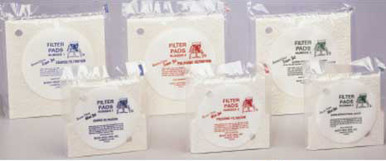
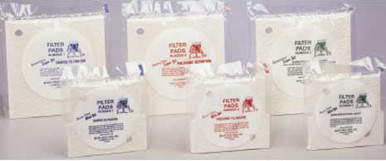
Buon Vino "Compatible" Fine (1.8) Polishing Pads. (1.5 - 2.5 microns) and they remove medium to small particulate and adds brilliance to your wine. Fits SuperJet and sold as group of 3.
Packaging: This product may or may not come in a pre-packaged wrapping from the manufacture/distributor. Regardless of packaging technicque, customers are to be aware of the below information/instructions.
DETAILS & STEP-BY-STEP INSTRUCTIONS FOR BUON VINO FILTER JETS (SUPER or MINI)
Buon Vino or similar "sterile" filter pads are not medically sterile; the term "sterile" in this context refers to microbial-retentive nominal filtration (0.5 micron) capable of removing yeast and bacteria from wine.
Understanding "Sterile" Grade Pads
- Filtration Rating: They feature a nominal rating of roughly 0.5 micron, meaning they trap microscopic particulates, yeast cells, and bacteria to polish wine.
- Packaging and Use: They are sold packaged in sets of three (the exact number required for Buon Vino Mini Jet or Super Jet units), but the packaging is clean-commercial rather than medical-grade aseptic or autoclaved sterile.
- Sanitation Steps: Winemakers must still wet or rinse the pads and properly sanitize their equipment before running wine through the system.
It is absolutely a sanitization issue if customers skip the proper preparation steps. The shift to individually shipped loose pads magnifies this risk, as they are completely exposed to environmental dust, handling, and shipping contaminants.
However, even when they came in factory-sealed packs of three, using them "straight out of the package" without preparation was always a mistake.
1. The Physical Issue: The Machine Won't Seal
According to official instructions from Buon Vino Manufacturing, pads must be fully saturated with liquid before insertion. Dry cellulose pads cannot form a proper compression seal against the plastic filter plates. Skipping the soak causes the machine to bypass filtration, spray wine out the sides, or draw in oxygen that oxidizes the wine.
2. The Flavor Issue: The "Cardboard" Taste
Cellulose pads naturally shed paper dust from rubbing together during shipping regardless of packaging. If they are not pre-rinsed or conditioned by running a gallon of water through the assembled machine, that paper dust transfers directly into the first few bottles of wine, ruining the flavor profile with a heavy, wet-cardboard taste.
3. The Microbial Sanitization Issue
Because "sterile pads" are not packaged in a medically sterile environment, they must be chemically prepped to prevent introducing spoilage organisms (like wild yeast or Acetobacter):
- The Solution: Winemaking experts and suppliers recommend soaking each pad in water mixed with a pinch of potassium metabisulfite (or a metabisulfite and citric acid solution).
- The Risk of Loose Shipping: When loose pads are handled individually by warehouse workers, tucked into random shipping boxes, or exposed to ambient air, the microbial load increases drastically compared to the original sealed 3-packs.
The Bottom Line
Any customer using these pads—whether loose or from the old 3-packs—dry and unsanitized risks ruining their wine batch via oxidation, bad paper flavors, or bacterial contamination.
Follow this exact step-by-step sanitization, setup, and flushing routine to keep the wine protected and avoid paper flavors.
Step 1: Sanitize the Equipment & Hoses
Before handling the pads, you must clean the machine's pathways.
-
Make up a standard sanitizing solution in a large bucket using 1 tablespoon of potassium metabisulfite and 1 tablespoon of citric acid per 1 gallon of warm water.
-
Submerge your intake, output, and drip tray hoses in this solution for 2 to 3 minutes.
-
Disassemble the plastic filter plates from the machine and wipe, spray, or submerge them in the sulfite solution to sanitize. Reassemble the empty plates into the machine
Step 2: Prepare the Pad Soaking Solution
To protect the cellulose pads from being chemically stripped or transferring an excess of sulfur to your wine, use a milder, highly specific ratio.
-
The Recipe: To 1 quart (1 liter) of cold water, add 1/8 teaspoon (1 gram) of potassium metabisulfite and 1 teaspoon (3.5 grams) of citric acid.
-
The Soak: Place your 3 filter pads into a shallow, clean pan containing this solution. Submerge them entirely so they don't float. Let them soak for 1 to 2 minutes until completely saturated.
Step 3: Insert and Align the Pads
-
Loosen the machine's black handwheels.
-
Shake excess liquid off the wet pads. Slide them between the plastic plates.
-
Crucial Orientation: Ensure the coarse/rough side of each pad faces the pump/motor, and the smooth side faces the output. Make sure the pre-punched holes in the pads align exactly with the holes on the plates.
-
Hand-tighten the black knobs firmly. (As they absorb liquid under pressure, you may need to tighten them slightly more once the pump starts to prevent edge leaks).
Step 4: The Mandatory Pre-Flush (Flushing Paper Dust)
Do not run wine through yet. You must clear the loose paper fibers and any residual sulfur.
-
Place your intake hose into a carboy containing 1 to 2 gallons of clean, dechlorinated water.
-
Place the output hose into an empty "waste" bucket or drain.
-
Turn on the pump and run the clean water completely through the machine and pads.
-
Watch the output line. Once the water runs totally clear and free of tiny paper fragments, turn off the pump. Discard this water. Your pads are now wet, microbially clean, compressed, and free of the "cardboard taste".
Step 5: Begin Filtering the Wine
-
Move the intake hose directly into your settled wine carboy. Keep the tip slightly off the very bottom to avoid sucking up thick lees.
-
Keep the output hose in your waste bucket for the first few seconds. Turn on the pump.
-
Water trapped inside the lines will push out first. The second you see color/wine pushing through the clear output line, instantly move that hose into your clean, sanitized receiving carboy to capture your wine.